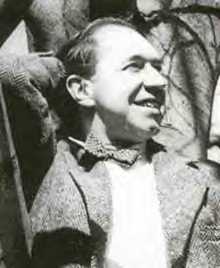
Laurie Johnson is one of my favorite of all film composers and so I couldn't resist writing a blog about this magnificent man. Well, I really don't know how magnificent he is in real-life....but judging from his music he sure is magnificent.
Most people are familiar with one particular piece of music that Laurie Johnson wrote, even if they do not recognize his name - The Theme to The Avengers, the popular ultra-cool British spy show of the 1960s. It's unique bongo beating beginning leads us into the tinkling of champagne glasses before the real theme begins....a delectable mixture of big band and mod London swing which captures the spirit of the show to perfection.
Although this is his most internationally recognized work of theme music, he wrote many other scores for popular films such as Stanley Kubrick's Dr. Strangelove, First Men in the Moon, Tiger Bay and Captain Kronos: Vampire Hunter.
Laurie Johnson was born on February 7th, 1927...( Happy Birthday Mr. Johnson!! ) in Hampstead, England. After studying at the Royal College of Music he launched his music career at the young age of 19 by working as an arranger/composer for Ted Heath and his band. And later for bandleaders such as Jack Parnell and Ambrose.
Before venturing to the film industry he dabbled in making dance arrangements of popular songs of the mid-50s at Pye Records ( later home to such artists as Tony Hatch, Petula Clark and the Kinks ).
In 1955 he began work as an arranger and orchestrator at some smaller film studios in London such as the Associated British Picture Corporation until he worked his way up to getting assignments as a composer. His first full-fledged film production was a film called The Moonraker which starred legendary English actors Eric Portman and Celia Johnson.
It wasn't until 1959 that he made his first big hit with the score for Tiger Bay, a suspense drama starring John Mills, Horst Bucholz and Hayley Mills. After a few more minor films such as I Aim at the Stars ( about the life of Werner Von Braun ), Operation Bullshine, and Spare the Rod, he hit his "prime" and began writing for film and television in such an astounding succession.
One of his most beautiful songs is the Romance theme to Ray Harryhausen's First Men in the Moon ( 1964 ), a gentle "light classic" that captures the Victorian English country setting that the movie took place in and rather brings to mind the theme to another great H.G Wells film The Time Machine. Laurie Johnson had been working as an assistant to composer Bernard Herrmann on previous Charles Schneer fantasy productions such as Mysterious Island and Jason and the Argonauts so when Herrmann declined to accept the assignment for First Men in the Moon Johnson took the helm and did quite a magnificent job.
He entered the UK Singles Chart with "Sucu Sucu" the theme music to the television series Top Secret in 1961 and it was in television scoring that he was to be most prolific. Between 1965-1980 he worked on such wonderful series as The Avengers, The Professionals, The New Avengers, Shirley's World, and Thriller.
In the 1960s and 1970s he continued to be busy composing for films, composing his own symphonies,as well as for theatre work. Hot Millions and Hedda have especially lovely melodies and in 1967 he composed the music for a stage version of The Four Musketeers.
In the late 1980s to early 1990s he composed the music to several TV movie adaptions of historical romance writer Barbara Cartland's novels including A Hazard of Hearts ( what a beautiful score! ) and The Lady and the Highwayman. But alas, in the realm of film and television Laurie Johnson has since ceased to be active. Currently he is still very much involved in his band The London Big Band which specializes in performing big band swing and pop music.
The first composer to be featured in our British Music Series can be considered a prime example of a composer of light music as well as film. Richard Addinsell excelled in both fields equally and hence he is the first and foremost choice of mine to be featured in this exciting new series. Well....at least it's exciting for me, it may be a bit of a yawner for me readers.
The Warsaw Concerto is Addinsell's most famous and oft performed composition. It was written apart of the score ( or I should say, as the score ) to a little known film called Dangerous Moonlight ( 1941 ) starring Anton Walbrook. Prior to this Addinsell had wrote scores for Dark Journey, Fire Over England, The Lion Has Wings and Goodbye, Mr.Chips.
The Warsaw Concerto's unexpected popularity ( it has been recorded over 100 times and had sales in excess of 3 million dollars ) was both a blessing as well as a curse because it's fame has obscured all of his other works; works that are just as magnificent and beautiful even if they aren't well known.
Richard Addinsell was born in London, England on January 13, 1904. After being homeschooled by his mother, he enrolled in the Hertford College in Oxford to presumably study law, but after only 18 months Addinsell quit and decided to focus his interest on music. He then enrolled at the Royal College of Music but only remained there a few months as well. His non-traditional educational upbringing made him restless at traditional schools and so he decided to pursue his own line of music study through "on-hands" learning. This proved just as good as a formal education.
 |
| Goodbye Mr.Chips |
After touring Europe he wrote incidental music for a variety of British plays and radio programs. One of these plays introduced him to Douglas Fairbanks Jr. who along with writer Clemence Dane, led him into the film industry in 1936 with the job of writing the score to The Amateur Gentleman.
For the next 20 years Addinsell was kept busy writing film scores ( Love on the Dole, Blithe Spirit, Under Capricorn, Passionate Friends ) as well as some twenty documentaries for the Ministry of Information. A chance meeting with comedienne/actress Joyce Grenfell launched a lifelong friendship and collaboration with her on music for her one-woman shows. Between these film and stage projects, Addinsell was also busy doing work for BBC radio plays and television - where the bulk of his "light music" played as openings to shows.
 |
| The Passionate Friends |
The majority of Addinsells film scores prior to 1950 were destroyed by the studios ( a common practice, as they felt there was no use for them after a films release ) but many of these beautiful works were re-constructed from the films themselves by composer Philip Lane and have been performed by Kenneth Allwyn and Rumon Gamba and released as collections on cd.
Below are just a few sample sound clips from some of Richard Addinsells large body of work. A quiet man in real life, he used music as a way to release his inner passion and the heart-felt emotions he experienced can be heard in many of his compositions. He also made frequent use of the piano in his music - being an excellent pianist himself - and this feature seems to make even his most ambitious of light classical pieces appealing to the mass audience. It also anticipated the piano/orchestra style later popularized during the 1960s by Ferrante and Teicher, and Roger Williams.
Tom Brown's School Days - was written for the 1951 film starring John Howard Davies and Robert Newton.
Click here to play music
The Isle of Apples - is a beautiful melody written in the English pastoral style. This miniature evokes a medieval reverie and it's title most likely refers to Avalon, the legendary burial place of King Arthur.
Click here to play music
The Smokey Mountains Concerto - First Movement - Addinsell rarely wrote music that was not assigned for a film or a stage work but this is one case that he did. It is a 15 minute piece written in three parts...First Movement, Valley Song and Old Joe Clark and captures the folk history of America.
Click here to play music
A Tale of Two Cities - Richard Addinsell had hoped that A Tale of Two Cities would of "taken off" as a success like Warsaw Concerto but it did not, and today even the film it was written for ( starring Dirk Bogarde ) is not remembered all that well.
Click here to play music
Appleshaw's Allure - The title of this lovely song is actually Tune in G, but that was such a dull name I redubbed it Appleshaw's Allure. Appleshaw was the name of the country home where Addinsell's parents resided and where this song was first composed.
Click here to play music
As if we didn't have enough topics going on at once, today I thought of a marvelous idea.... a series of blogs on British composers. Especially....light music and film composers. If there is any field of music that gets overlooked it's Light Music. Wikipedia defines light music as "a generic term applied to a mainly British musical style of "light" orchestral music, which originated in the 19th century and had its heyday during the early to mid part of the 20th century. The style is a less "serious" form of Western classical music, featuring through-composed, usually shorter orchestral pieces and suites designed to appeal to a wider audience than more serious compositions. "
Yes, that pretty much sums it up. Where classical music can sometime be "above us" in it's composition, light music is always simple and refreshing while at the same time is very moving. In particular the pieces tend to capture a "mood" or an event, such as "A Day in the Park" and therefore are often referred to as "mood music" as well.
 |
| Composer Eric Coates |
Light music originates back to the days of the operetta, but did not reach it's prime until the beginning of the early 1930s with the advent of radio. BBC Light Programme ( a radio station created in 1945 ) contributed greatly to the spread of this fine music and for the next 20 years the field reached it's halycon.
Light music is the music of choice to those who enjoy popular tunes but who do not quite have the...ahem..patience...for really heavy classical pieces.( People like me, that is ) The accentuation of the music is placed on melody and therefore even a classic music novice can enjoy these beautiful songs without feeling lost.
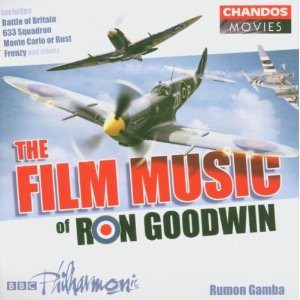
Some of the composers we will feature in this series will be Eric Coates ( the creme de la creme of light music composers! ), Ernest Tomlinson, Adrian Leaper, Robert Farnon, Ron Goodwin, Anthony Collins and Sydney Baynes.
AND since we're on the topic of England's finest musical masters we might as well cover that delectable slice of listening pleasure known as British Film Music. The list of legends in this field is practically unfanthomable but a sample of our warblings will include Ralph Vaughn Williams, Arthur Bliss, Charles Williams, Allan Gray, William Alwyn, Anthony Collins, Stanley Black, Clifton Parker., Richard Addinsell..and who can pass up Sir Malcolm Arnold? Not I!
 These legendary composers created the rousing/compelling scores to such classics as "Sink the Bismarck"; "49th Parellel"; "David Copperfield"; "The Bridge on the River Kwai"; "An Ideal Husband"; "A Canterbury Tale"; "The Dam Busters" and "Scott of the Antarctic" as well as many, many others.
Each of these composers had a unique style which they contributed to every film, and which consequentily set the tone for the movie and made them as recognizable in theme as their composer's compositions.
 Who can think of lovable Miss Marple ( Margaret Rutherford ) without hearing strains of Ron Goodwin's familiar harpsichord melody in their head?
Since I have no concept of order and organization I will just randomly write about these composers at whim....and hopefully by the end of the year will have covered enough composers to give me mateys a thorough overview of these wonderful fields of music. And with a goodly dose of digital music clips tossed in...who knows? you might just come to be as fascinated with the subject as I be!