Friday, November 4, 2011

The World War II Ambulance - The Dodge WC54

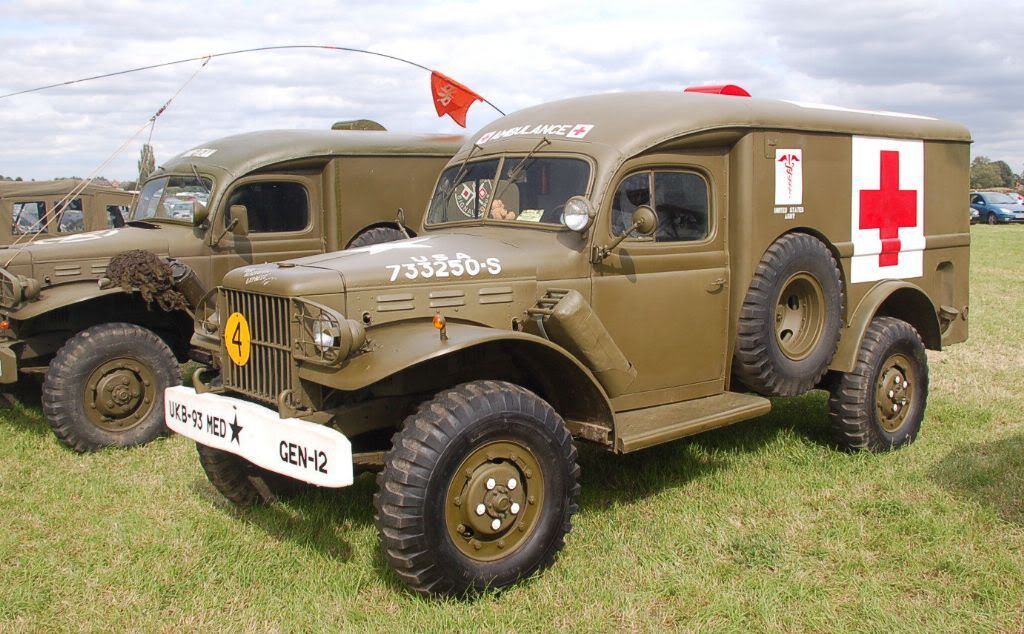
Driving those who needed medical attention through rough and rugged war-blown terrain needed a rough and rugged ambulance...and the Dodge WC54 3/4 ton truck was the vehicle of choice for the United States Armed Forces. Over 250,000 were made between 1942-1945, and of these 22,000 were ambulances.

These sturdy trucks weighed 5,900 lbs and were capable of travelling up to 54 mph ( for a truck like that during the war, that wasn't too bad ). But at 8MPH they sure were gas gugglers!


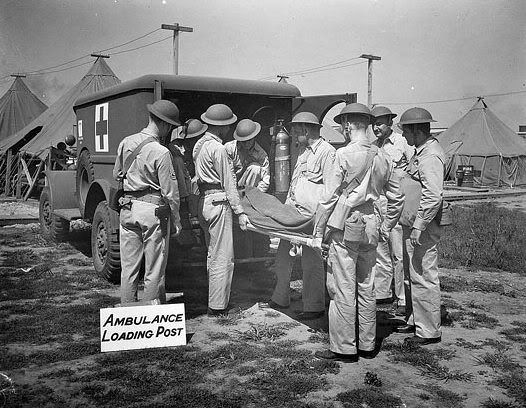
American Red Cross Medical Students practicing moving patients
in Dayton, Ohio 1942
 Dodge Corporation had previously made the 1/2 ton WC9, WC18, and WC27 ambulances for use during the war, but it was the WC54 that became the most popular, and was used throughout Europe and the Pacific, safely rescuing thousands of injured soldiers from the battle front.

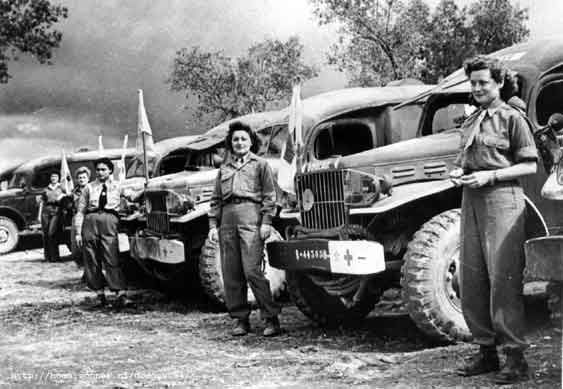
Women ambulance drivers posing besides Wc54s

The trucks were built at Dodge's Mound Road plant in Detroit, Michigan and then were delievered as a chassis/cab with the trunk, radiator front windscreens and doors intact, to Wayne Works of Richmond, Indiana from whence they recieved their picturesque steel-panelled body. They measured 192 inches in length ( 16 ft ), and were powered by a six-cylinder gasoline engine.

Today, WC54s can be seen at Military Transport automobile gatherings and military museums, as well as in movies and television, notably in M.A.S.H and Patton.

The olive-drab colored WC54 on display


Wednesday, November 2, 2011

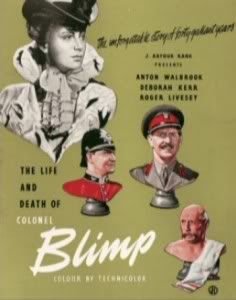
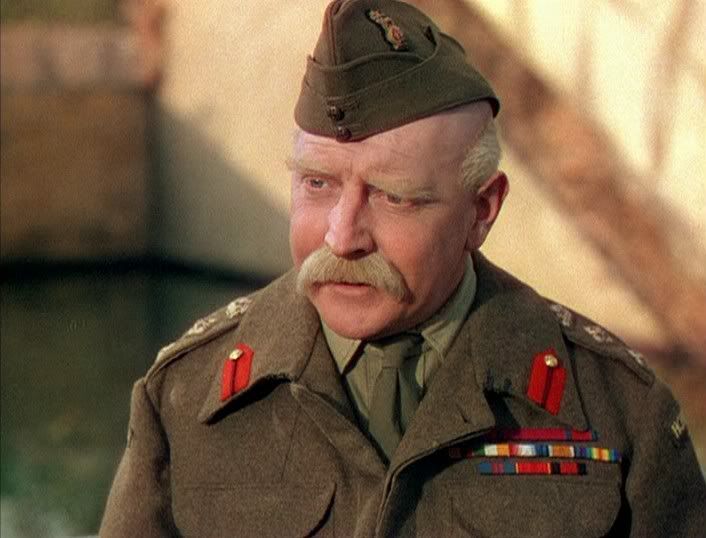
The Life and Death of Colonel Blimp

"But war starts at midnight!! "
 
Poor Colonel Blimp.... he just doesn't understand. Times have changed Blimp old-boy; your adversary will no longer play by the rules. A piece of paper on "conducts of war" will not hold back an army of embittered patriots striving to regain the esteem ( and fear ) of the world for their crippled nation. Hitler wants Lebensraum for his Bundes-Republik, whether a little nation like Britain approves or not. And outdated theories on how war should be fought are not going to protect jolly ol' England.
 
" Clive, if you let yourself be defeated by them just because you are too fair to hit back the same way they hit you, there won't be any methods but Nazi methods. If you preach the rules of the game, while they use every foul and filthy trick against you, they'll laugh at you. " explains Herr Kretchmar-Schuldorff, " This is not a gentlemen's war. This time you are fighting for your very existance, against the most devilish idea ever created by a human brain. Nazism. " 


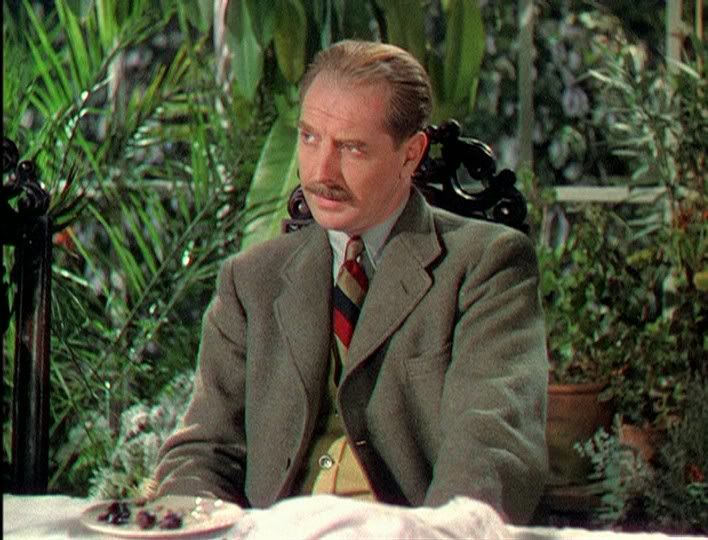
Major-General Clive Wynne-Candy is the title character in this fictional war biography from two of the most creative masterminds in film history : Emeric Pressburger and Michael Powell ( Black Narcissus, I Know Where I'm Going! ).

Colonel Blimp was originally a cartoon by David Low, featuring incidents about a bald-headed, red faced buffoon of a colonel and his old-fashioned political notions. It was decided that this popular comic would be a very good main character for a film, and so Emeric Pressburger weaved a wonderful story around this pompous walrus and out came the script, " The Life and Death of Colonel Blimp".


THE STORY 

The story begins in the current year, 1942. A group of army soldiers are preparing for a routine war simulation exercise. Colonel Blimp ( Roger Livesay ) is in charge of the 'Defense of London', and must have his men ready for "WAR BEGINS AT MIDNIGHT". Now, the opposing "army" discuss amoung themselves.. "The Nazis will not wait for war to be officially declared so why should we? Let's strike early!" And strike they do, promptly plopping Blimp in his bath, which happens to be a pool of retrospection for the benefit of us viewers.


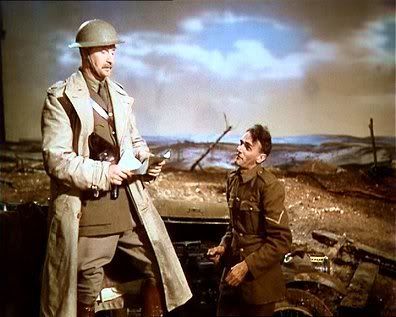
We follow Wynne-Candy from his youthful days as a decorated British officer in the Boer War, to his middle aged years of hunting wild animals, to being a Brigidier in France during WWI, to the present times as a Major-General for the Home Guard - a retrobutive position he took to prove his worth, after the Army declined him a position in the military.


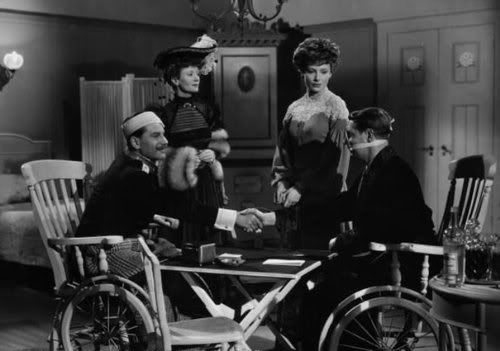
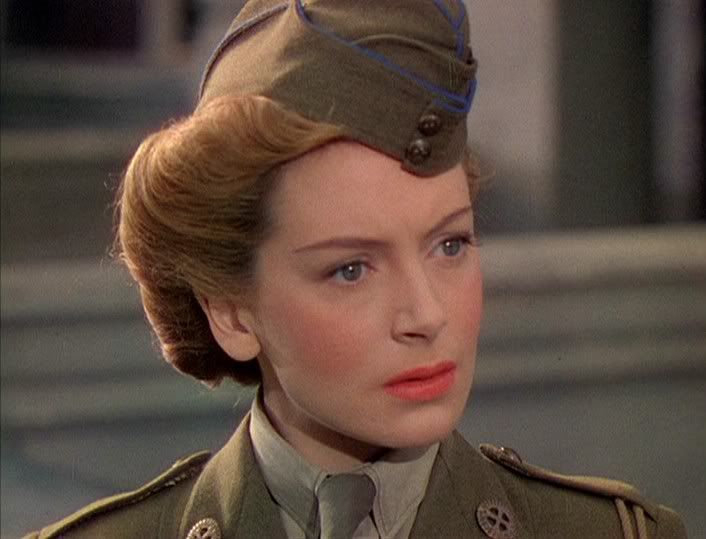
Ah! But lets not forget the romantic interest in this movie - Deborah Kerr. She plays three different roles in three different eras, each one representing the ideal image of English womanhood. Clive meets the first portrayal from Ms.Kerr ( as Edith Hunter ), when she notifies him of the anti-British propeganda a scoudral named Kaunitz is spreading in Berlin. Later, at a restaurant there, they intentially antagonize him and Clive must attend a 6am duel to defend his honor. His opponent, Theo Kretchmar-Schuldorff ( Anton Walbrook ), is a master swordsman and the outcome of this stunt is a draw. While they are both recouperrating in a nursing home for two months they become good friends, even though Schulldorf can only say "very much" and not very much beyond that. Miss Hunter is also a frequent visitor, because the British government thought it be better for international relations, to make her the cause of the duel. It is not until Schulldorf announces his engagement to Miss Hunter, that Clive realizes he was in love with her too, and throughout his life he tries to find another like her. Which he does - or so he thought.


THE BURSTING OF A BLIMP 

Production on "The Life and Death of Colonel Blimp" began in late 1942. After four months of filming under "blitz" conditions, an expense of 1,000,000 pounds, and having beared a watchful eye from the government ( Prime Minister Winston Churchill tried to prevent the movie from even being made ), it was released in 1943 and recieved praiseworthy reviews from the critics.
Much of its original 163 minutes of footage was cut to 93 minutes for its overseas distribution because of its disheartening image of British military prowress ( Daily Mail wrote, " We cannot afford to put out a burlesque figure like this screen version of Colonal Blimp, to go round the world as a personification of the regular British officer " ), and its sympathetic German character.


Luckily, today it can be viewed in its entirety on the beautiful two-disc Criterion Collection edition loaded with supplementary material ( what a great company Criterion is! ). You can marvel at the sensous Technicolor and the crystal-clear detail of this transfer. Jack Cardiff, a long time collaborater with Pressburger and Powell, did a magnificent job on the cinematography, so fortunately none of that footage was lost, as is the case with some other films.

Cable television does not air this movie often, so its no surprise that it is relatively unknown in the United States. Nevertheless, "The Life and Death of Colonel Blimp" is a magnificent film and deserves all the recognition it can get. I like this movie "very much".

Tuesday, November 1, 2011

Lady Elizabeth Butler, Military Painter

Elizabeth Sotherden Thompson, Lady Butler ( 1846-1933 ) is often considered one of the greatest battle painters in British history. She had never witnessed a battle in person and yet she was able to capture on canvas what many of her male counterparts had failed to - the common soldier. The spirit and the glory of the life of a soldier she portrayed with such colorful fervor, as well as the savagery of battle and the pathos of war that he had to endure.

One of her most widely reproduced works The Remnants of an Army is singularly bleak and inglorious. It depicts the lone survivor of the 1842 massacre of British troops near Kabul, Afghanistan. A weary horse bearing its exhausted rider upon its back stumbles half dead returning to the dusty outpost from whence they came.

Alice Maynell, a poet and essayist ( and Lady Butler's sister ) claimed that "she has done for the soldier in art what Rudyard Kipling has done for him in literature - she has taken the individual, seperated him, seen him close and let the world see him ".

And the world did indeed she him, for Lady Butler created a large body of work which exists in museums and private collections around the world. So many beautiful paintings in fact, that one could chronicle the history of the 19th and 20th century British warfare through them.

Lady Elizabeth Butler was the daughter of an eccentric of independant means. Her mother was a gifted woman of the arts, with a talent for painting and singing.  Born in Lausanne, Switzerland, she studied art as a child and at the age of 20 went to England to pursue her love of painting at the Female School of Art. It was while touring a gallery in Paris, and seeing numerous scenes of military battles painted in oil, that she decided that portraying War and its heroic soliders, in all its aspects, was what she wanted to do.


Floreat Etona! Two Eton boys at the Battle of Laing's Nek

Victorian romanticisim of the British Empire was at its height and with her first major painting - The Roll Call - she became a celebrity known throughout Europe not only for her skill with the brush but for her good looks as well. It was Major William Francis Butler who managed to capture the lady's heart. They were married in 1877, and she travelled with him throughout the Empire while he served in the British Army, raising their six children in various locations.

Her husband had increasingly disparaging views of the effects of Imperialism upon the natives and decided to retire early and settle with his family in Tipperary Ireland where he became a strong sympathizer with the Catholic emancipation and Irish independance movements. Although Lady Butler shared her husbands views on the role Imperialism played, she continued to paint scenes of the heroism and valor of the British soldier.

" I never painted for the glory of war, but to portray its pathos and heroism " Lady Butler
The GLORY of the soldier is what makes her paintings so remarkable...to this day they stir the soul to excitement. One of her best known paintings Scotland Forever has become a legendary symbol of the Battle of Waterloo. Whether it was accurate or not makes little difference for it captured the thrill of a defending army surging into the very midst of the hell of a battlefield, and it justly deserves its fame as one of the most heroic military paintings ever produced.


Friday, October 28, 2011

The Rookery

A couple of days ago my father took my sister and I on an outing to The Rookery, one of our favorite bird watching sites ( even though we don't birdwatch ). What makes the area so special to us and wonderful is the fact that nobody seems to know about it! And since this blog of mine will never become a world-renowned hotspot, I'll gladly share with me mateys the secret and mystery of this secluded woodland.

If there be two words that summarize The Rookery, they be Beautiful Desolation. For that's what this place is....especially in Autumn. From a glance you percieve the area to be barren and void of life, and yet upon a closer look you find that it is not dead, but alive. Very much alive. Teeming with Life and Beauty.

The Lord is so magnificent that He created Nature in such a way that even in its stage of yearly degeneration it contains a splendor that makes it beautiful and enchanting.


The Rookery is a 562 acre tract of land which sits upon property where the Cleveland Interurban railway once went through. Operating from 1899 to 1925 this railway took passengers from Cleveland to various points in Geauga County. At the heart of the Rookery is the Junction, a wye in the tracks where passengers from the city could either continure northeast to Chardon or wait for a connecting trolley to the Amish territory of Burton and Middlefield.


Today the tracks are gone and only the ghosts of the Past reside in this woodland. Blue Herons are now the most frequent visitors to this area, as well as the occasional "picnicker", that very rare variety of the walk-in-the-woods homo sapien. 

The path known as the Interurban Trail ends abruptly and those new to the park will find themselves walking past Maple Ninth, the private TRW golf course and eventually out to Rock Haven road, where they can search in vain and not find a path to lead them back to the Rookery.

 A signpost at the Junction should be posted reading " You will return ".

Ye be welcome to enter this silent oak-laden abode ....but return to civilisation at your own risk!  Yes, a quick turnabout on the heels is the only way to find yourself back at the old silo, the noticable entrance to the pathway, and now home to the occasional owl.


The Rookery is located at 10110 Cedar Road, Munson Township.

Sunday, October 23, 2011

The Best of Now and Here

                            Be content with such things as ye have. - HEB xiii 5

                                        No longer forward nor behind
                                              I look in hope or fear;
                                        But, grateful, take the good I find,
                                            The best of now and here.    

                                                                      J.G Whittier               

Thursday, October 20, 2011

The Sunbeam 3 cylinder Coupe de l'Auto Racer

Sunbeam Motor Company became famous after this little beauty of a racer and three other Sunbeams were entered in the Couple de l'Auto Race in France and won 1st, 2nd, and 3rd places. Prior to that Sunbeam was a relatively unknown motor car company.....

John Marston, the founder, had begun a bicycle business in 1877 and supposedly his wife saw the way the black enameled frames reflected the sun and gave them the name "Sunbeam". Bicycles sales were good but automobiles were the wave of the future, and in 1901 he marketed his first motor car....The Sunbeam Mabley Cycle car, an unusual car with one wheel in the back, one in the front and two on the side. Surprisingly, they sold well. But it was when this 3 litre 4 cylinder racer won international recognition that Sunbeam really took off as an established automobile company. It could reach speeds of up to 85 mph, and my, what a fine body it had!


Saturday, October 15, 2011

Bedknobs and Broomsticks


Treguna Mekoides and Trecorum Satis Dee

"I don’ t want locomotionary substitution, or remote intransitory convolution, only one precise solution is the key….substitutiary locomotion it must me! " 


Yes, Eglantine Price was searching, not for locomotionary substitution, nor for remote in transitory convolution, but for that secret magical spell – Subsitutiary Locotion – that would be the key to single-handedly quenching the onslaught of the Nazis and putting a stop to the war!
In her secluded country estate in the cover of night, mild-mannered apprentice witch Miss Price, along with her scraggly looking cat Cosmic Creepers, practiced her latest lessons from Professor Emelius Brown’s Correspondence College of Witchcraft. However, when three evacuee children from London take lodging in her home, her top-top secret identity is discovered and as an exchange for their silence she gives them a special Travelling Spell.

"The game’s up Miss Price, we know what you are"



A bedknob ( and its matching bed ) become the initiators of this fantastic spell, and it’s put to good use quickly when Miss Price and the children set out for London to enlist the aid of Professor Brown in searching for the all-important magic words of Substitutiary Locomotion. Their quest takes them to Portobello Road, the street where the riches of Ages are stowed, where they meet the wily Bookman ( Sam Jaffe ), another Substitutiary Locomotion spell-hunter and his knife-wielding henchman Swinburne; to the Beautiful Briny Sea where they have a chance to get a better peep at the plants and creatures of the deep; and to the not-so-mythical animated Isle of Namboombo, a land of talking animals where the legendary magician Astoroth ( the spell’s creator ) was believed to have spent his final days. Aha….but do they find the magic words to Subtitutiary Locomotion AND put it to use before the approaching Nazis invade Pepperinge Eye and the coast of England?


Well, this being a Walt Disney movie, I’m sure we all know the answer to that question.


"Bedknobs and Broomsticks" was based on two books written by childrens author Mary Norton in the mid-1940s. " The Magic Bedknob, or How to be a Witch in Ten Easy Lessons" and its sequel "Bonfires and Broomsticks" were originally purchased by walt Disney in 1963 as a back-up plan in case P.L Travers did not like the retelling of her story Mary Poppins, a movie which was already in its pre-production stages at the time.


Since Mary Poppins got the go ahead, Bedknobs and Broomsticks was put the back-burner and it was not until 1969 that Bill Walsh blew the dust of the kettle and got it boiling again.

Initially Julie Andrews was offered the part of Eglantine Price ( along with Leslie Caron, and Lynn Redgrave ) but had turned down the role. She later changed her mind, feeling she owed her start to Disney and wanted to work at the Studios again, but by this time Angela Lansbury had already been offered the role and accepted …signing the contract on Halloween Day of 1969.

And what a great choice she was! Miss Lansbury played Eglantine, the apprentice witch, with conviction and heart. And the wonderful David Tomlinson ( Mr.Banks of "Mary Poppins" ) played penny-any magician Professor Emelius Browne, a role he took to with a flair.

Mr. Browne :  Bookman! Before your very eyes, I shall cause this bed, and all the occupants upon it, to disappear!
Bookman : Disappear? I should like to see a cheap-jack tenth-rate entertainer do a trick like that.
Mr. Browne : Cheap-jack entertainer. Now that was naughty.


The three children ( Ian Weighall, Roy Snart, Cindy O’Callaghan ) were all making their screen debuts and save for Cindy O’Callaghan, have not done any other film work since then. A pity, because they were very good child actors. 


Roddy McDowall played Mr.Jenks, a priest with an eye for Miss Price ( or rather, her valuable bit of property ); Reginald Owen was…well, Reginald Owen….mouth wide-agape and commandeering the soldiers of the Old Home Guard; Tessie O’Shea played shopkeeper, town gossip and postmistress Mrs. Hobday, and rounding out the cast was John Erikson, as the Nazi captain who has a bad fall-in with some headless fighting armor.


Bedknobs and Broomsticks is a heartwarming and bewitchingly enchanting movie and like most Walt Disney films, the supercalifragilistic Sherman brothers song-writing team had a big part in contributing to this. "Bedknobs" is chock full of wonderful whistlable tunes like "The Beautiful Briny Sea", "Portobello Road" and "Eglantine, Eglantine!" and BEST of them all is the lovely "The Age of Not Believing" ( nominated for an Academy Award ). It’s words brilliantly capture that period in life that we all go through at times, when we doubt our own abilities and lose faith in our dreams.

"Filigree, apogee, pedigree, perigee!"


Miss Price wasn’t a very capable witch, even for an amateur. She couldn’t fly a broom straight, nor turn a person into a frog ( although she did have a knack for morphing them into fluffy white rabbits ) but she had a heart of gold and tried the best she could to save her beloved England. Technically, a witch is a lady unless circumstances dictate otherwise, and at the closing we see this clearly demonstrated in Eglantine as she dons her battle helmet and pulls out all the stops to fight the Nazis had on.

Prepared for Attack!


"Bedknobs and Broomsticks" premiered in 1971 at Radio City Music Hall as part of their Christmas show, but unfortunately over thirty minutes of this wonderful movie had to be cut to fit into its two hour time slot. And for some reason this sliced footage was left out of all the subsequent national showings as well. It was not until 1997, for the 25 th anniversary vido edition, that most of this deleted footage was reinstated. It's still missing a few key scenes, but we'll not complain, after all it's a step in the right direction.

Oh, bother! I do hate shoddy work!

Thursday, October 13, 2011

Decked Out in Royal Fashion

Playing cards became popular in Europe arund 1378 and although their origin remains a mystery to this day - did gypsies from India bring them over? were they invented to entertain Chinese emperor Houi-Tsong's concubines in 1120? - their popularity is here to stay.

Card players are very particular about the illustrations used on cards. Different images and patterns can throw off their concentration, hence card designs have remained pretty much the same since the fifteeenth century.

The English design that most card players are familiar with was derived from the Auvergne patterns of the eighteenth century. During this early period in card playing history, different regions of different countries had their own unique faces. Especially in France this was so. A card player from Lyon about to engage in a friendly little gamble in Paris would not recognize the pattern on the cards dealt to him!

The Paris pattern goes back to the sixteenth century and is the source of contemporary French cards. It's principal characteristic is the attribution of names to the various characters depicted ( the theme of this blog, if I ever get 'round to coming to the point )

In 1813, after the Revolution, a unique deisgn was chosen to represent the entire empire. Engraver Nicolas Marie Gatteaux's pattern was selected and in 1830 it officially recieved  it's double/mirrored end. ( Hip Hip hooray! ) Running along the left sides of these cards were the names of whom the Kings, Queens, and Jacks represented.....

King of Spades - King David
King of Clubs - Alexander the Great
King of Hearts - Charlemagne
King of Diamonds - Julius Cesaer

Queen of Spades - Pallas aka Minerva
Queen of Clubs - Argine
Queen of Hearts - Judith ( of the Book of Judith )
Queen of Diamonds - Rachel

Jack of Spades - Hogier the Dane, one of Charlemagne's paladins
Jack of Clubs - Lancelot
Jack of Hearts - "La Hire" a famous French warrior
Jack of Diamonds - Hector of Troy


Another smidget of absolutely purposeless information generously shared to me loyal crop of readers ( is anyone out there? ) by none other than Buccanneer Birdie herself. Yea verily, if you ever have need for nonsense, look no further than this obscure blog!

Monday, October 10, 2011

The Glorius Greenery of Sherwood Forest

This being Columbus Day I was going to write about Christopher Columbus and why we celebrate this day, but then I thought ' Oh bother....I want to write about Robin Hood! ' ...And so Robin Hood it is to be.

This morning Didi and I broke our usual Columbus Day 'Doctor Dolittle'-with-breakfast-in-bed routine and watched one of my all time favorite movies instead : "The Adventures of Robin Hood". Ah yes, Robin Hood ( sigh ) my hero. And no one played him with such joie de vive and downright brawny swash as Errol Flynn.

But was is even more amazing than Errol's dashing good looks (!) is the breathtaking Technicolor. Yea verily, the sumptous lush Technicolor was the star of this film. In 1938 there were only a few adventure films being made and even fewer in COLOR ( with the exception of Jesse James, released around the same time ), but even today when we have color action films galore to choose from, none can compare with the wonderful Robin Hood!


The astounding Technicolor shines in all it's greenery n'glory when Sir Guy of Gisborne and his entourage ride forth into Sherwood Forest. Golden shafts of sunlight falling through the leaves of the trees brightly shimmer upon the forest ground whilst Robin and his band of merry men congregate aloft in the boughs of the mighty oaks and sycamores, lying in wait to ponce upon their unsuspecting foe.

The Merry Men in Camoflage


And lo! amoung Sir Guy's Norman entourage was a fair beauty - the lovely Maid Marion ( Olivia de Havilland in her first color picture ). In a gown of crimson and gold satin she was the fairest flower in Sherwood.


After a scrumptious feast of pheasant ( generously provided by Prince John ) Robin took Marion aside and showed her how her Norman guardians treated the good people of Nottingham. "Not a pretty sight for such beautiful eyes as yours" but Maid Marion found it very interesting, and even moreso, understanding a little about the outlaw whom so many looked to for help.


These scenes in particular were always my favorite because they bring to mind many fond memories and noble feelings of yor, and there is not a patch of woods that I wander through without thinking of Sherwood and Sir Robin's band of merry men.


Sherwood Forest was actually not filmed in England at all, but rather in Chico, California, at a beautiful area called Bidwell Park where stately moss-covered oaks and sycamores abounded. But ANY forest can take on the magic and enchantment of Sherwood with a wee bit o' imagination.

Friday, October 7, 2011

Burnham Beeches

Burnham Beeches is a woodland in Buckinghamshire, England famed for its ancient gnarled beech trees and was quite a popular subject for Victorian painters. But of all of the studies done of this area, I do believe Burnham Beeches by Myles Birket Foster ( 1825-1899 ) to be the most beautiful. It is a watercolor painted in the late 1860s by one of the most renowned of Victorian illustrators ( please don't ask me what the difference is between an author and an illustrator, because I haven't figured out the answer to that confonding question yet! ) and it captures the magical beauty of an Autumn afternoon. You can see a wee bit of blue sky peeking in the upper top of the background, the reflection the sunlight was casting on the stream beyond, and almost feel the warmth of this October day and hear the gentle rustling sound of the leaves beneath the two worker's feet.

On film, the only director who managed to capture accurately the essence and sheer splendor of a Fall day was Frank Capra, in those opening scenes from Arsenic and Old Lace. For a painting though, this little watercolor did the trick and is able to transport us into the very heart of Burnham Beeches by a mere glance.


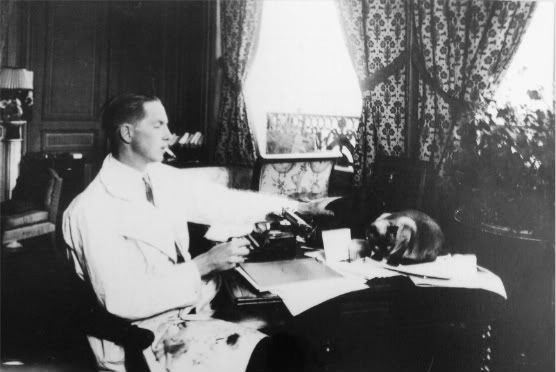
Louis Bromfield, Author and Conservationist and his beloved Malabar Farm

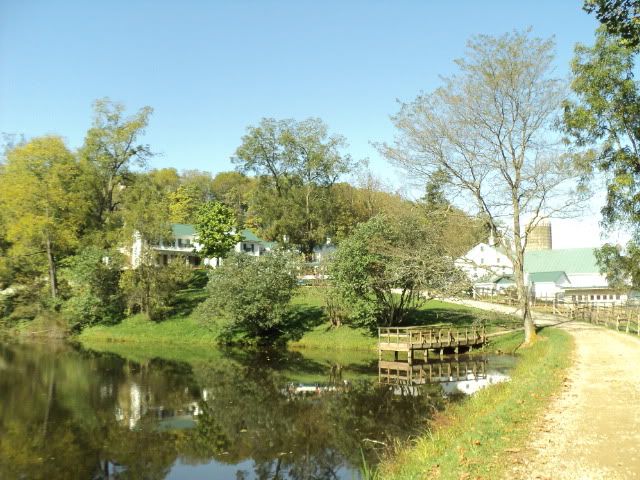
East of Mansfield, Ohio in Lukas County stands an estate known as The Big House and its surrounding property, Malabar Farm. Once the home of Pulitzer Prize winning author Louis Bromfield, it is now a 990 acre working farm and state park. Which means of course, that it's free to the public. Hence, this post for my readers to acquaint themselves with another hidden gem of Ohio!


Louis Bromfield ( The Rains Came, The Green Bay Tree, Mrs.Parkington ) was a native of Richland Ohio and after spending 14 years away from his hometown he decided, in 1938, to return with his family to look for a parcel of land on which to built a home and settle down to live the life of a farmer. He found this land in Pleasant Valley; 200 acres with several houses already on it, and he named it Malabar Farm ( Malabar meaning "beautiful hills and valleys ) in the language of India ). Unfortunately, he purchased the land in the winter season and it was not until the snow melted in Spring that he saw just what he had bought....worthless land in which even weeds would suffrocate.

And so the life of a farmer was not to be for him, and instead he spent his life - and his fortune - working to make the land usuable once more. He succeeded. And Malabar Farm has become an inspiration for many a farmer. it was once, and may still be, America's most famous farm. While Louis Bromfield was alive up to 20,000 people visited a year to see his show property. Now, some 300,000 visitors from around the world come to Malabar Farm each year.

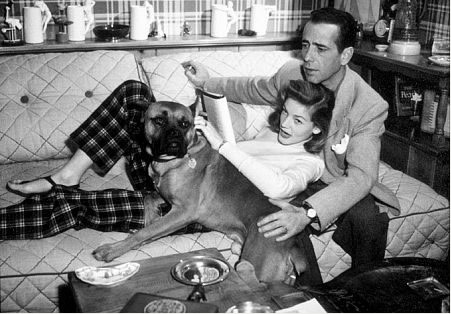
Situated on the property and open to the public daily for guided tours ( $4, $3.60 for seniors ) is The Big House, a sprawling 32 room estate built by Bromfield in 1940. Senators, congressmen, dignitaries, noted authors, and Hollywood stars all came to visit and stay at Malabar. A good friend of Louis, Humphrey Bogart, was married to Lauren Bacall in the foyer and they spent their honeymoon in the upstairs guest room.


Louis Bromfield was born on Decemeber 27th, 1896 in Mansfield Ohio. After dropping out of college and trying his hand at various odd jobs ( writing reviews for stage shows, working for Time magazine ) he decided to concentrate on writing. He wrote several novels at first to get the feel of writing well, and then burned them all and set himself to writing one GOOD story. His first, The Green Bay Tree ( 1924 ) was an instand commercial and critical success and Possession followed in 1925, along with Early Autumn in 1926, which won the Pulitzer Prize that year.

Louis and his wife and three daughters lived for over a decade in Paris and during this period he wrote A Modern Hero, The Farm, and The Rains Came ( 1938 ) one of his most popular novels. It was when war broke out overseas that Bromfield decided to come home and purchased Malabar. While living there he wrote another one of his most famous books, Mrs.Parkington ( 1943 ) which was turned into a film with Greer Garson and Walter Pidgeon in 1945. A very good film it was too.


Louis Bromfield promoted his conservational work by lecturing all across America, writing numerous articles for agricultural journals and major publications, and by writing over 10 non-fiction works on his beloved farm and the progress he was making. He died on March 18, 1956 of bone cancer and heavily in debt.

Doris Duke, a famed philanthropist, helped donate money for the state to purchase Malabar Farm. It is still a working farm today and maple sugar trees abound, as well as corn fields. Ellen Bromfield Geld, Louis' daughter, and an author herself, continues on the conservational work of her father with her own farm, Malabar, in Brazil.

There are hiking and bridle trails, a campsite, a hostel, a haunted house ( home of the notorious Rose Ceeley ), a cave, waterfall, lakes for fishing, glacier cliffs, a beautiful view from Mt.Jeez, and lots of smelly cows all to be seen at Malabar State Park.

Located at 4050 Bromfield Road, Lucas, Ohio. Tickets for the house tour and farm tour can be purchased at the newly built visitors center. Open all year round. And don't forget to stop and eat at the Malabar restaurant on your way out!

Tuesday, October 4, 2011

A Motoring We Will Go...

In the spirit of the autumn season ( a start of a new season is a good excuse to start anything ) I will begin a pictorial series on Motor-Cars. Yes mateys, motor cars with a capital M, because this series will feature the true, and one and only marvels of mechanical engineering...those vintage beautiful cars that were made between 1900 and 1930. Ah, I can hear the sound of their motors and the smell of the petrol already!

This will be a picture series because as that famous saying goes...a picture says a thousand words. And frankly, writing about cars is not my forte so that makes it all the easier for me. Let's being with one of me all time favorites....The Thomas Flyabout. This magnificent machine shown below is a 1911 model K - 670.


The Thomas Flyabout was made for only ten years, between 1903 and 1913, by E.R Thomas Motor Company of Buffalo New York. American through and through, this car was built solid and stood to last and it proved this to the world by winning The Great Race of 1908, a race in which driving competitors from 'round the globe brought their cars to race from New York to Paris...heading in a westerly direction of course. 22,000 miles this Thomas sped and it crossed the finish line after a grueling 169 days on the road. ( Incidently a wonderful motion picture was made about this race in 1965 starring Tony Curtis and Natalie Wood ).

E.R Thomas Motor Company began as a bicycle business in 1902, and then switched to the vastly popular new form of transportation, automobiles. Their very first cars were a series of "runabouts" made for cozy twosomes. The one you shown below is a Model 18, Thomas Touring Car.             .


The company was so successful in selling these little runabouts that they started making bigger and grander automobiles as time went on and the company earned a reputation for making reliable and elegant motorcars. The Thomas sold for a whopping $6,000 at the time of its manufacture. Unfortunately, the cars were becoming too grand and the company soon found its in recievership...and later purchased by a smelting company. Ah, but what grand motors they were while they lasted!